
The Washington Post Opinion Page
By Chris O'Brien Chris O’Brien is president of Sail4th 250 and a former executive director of Operation Sail.
In recent news coverage questioning the meaning of America’s 250th birthday and whether Americans are ready to celebrate it, there’s a legitimate anxiety about our fractured society. But many are missing the boat: Sometimes the act of gathering itself can help heal division.
Recall July 1976, when the nation was reeling from economic stagflation and racial strife as well as the legacies of Watergate and Vietnam. Months earlier, President Gerald Ford had refused to bail out a near-bankrupt New York City, inspiring the famous headline “FORD TO CITY: DROP DEAD.” Yet when tall ships sailed into New York Harbor for the bicentennial, 6 million people enthusiastically lined the waterfront. They weren’t celebrating because they thought everything was perfect. They were celebrating because they chose to remember what binds us together as a nation.
I felt the same pride in 1992 as a young aide to an admiral aboard America’s tall ship, the U.S. Coast Guard cutter Eagle, for the 500th anniversary of Christopher Columbus’s arrival in the Americas. I had the unglamorous duty of being in charge of the ship’s portable phone. A call came in: “This is Walter Cronkite.” And America’s most trusted voice began reporting on the dozens of tall ships again filling New York’s harbor.
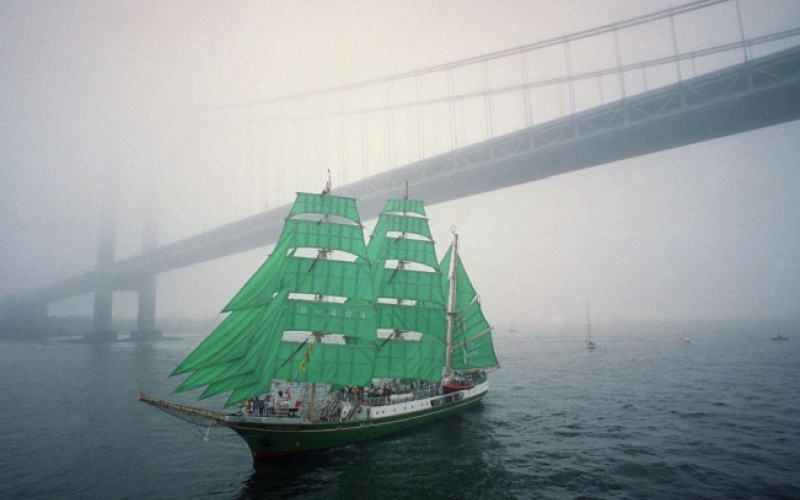
On July 4, the Port of New York and New Jersey will play host to the greatest peacetime naval gathering in U.S. history, where some 46 nations will be represented. This includes more than 30 tall ships, 50-plus allied and U.S. naval vessels, a British aircraft carrier, Cunard’s Queen Mary 2, and an international aerial review with more than 100 aircraft led by the U.S. Navy’s Blue Angels. NBC and Telemundo will carry the spectacle live nationwide.
This isn’t jingoism. It’s something more profound.
When foreign navies send their tall ships to America, they’re sending ambassadors of friendship. These magnificent vessels — many stretching over 300 feet — serve as training ships for future officers. Their crews learn seamanship, leadership and the value of international cooperation. By sailing into our harbor, these nations are making a statement about the enduring importance of America’s role in the world, even as we navigate difficult domestic and international debates.
President John F. Kennedy understood this. In 1961, he endorsed our predecessor organization, Operation Sail, to “promote international friendship, maritime heritage, and support for sail training through spectacular gatherings of the world’s tall ships.” Though he was assassinated before the ships’ first gathering for the 1964 World’s Fair, his vision launched a tradition that has united New Yorkers and Americans at pivotal moments for six decades.
Besides the inspiration these tall ships offer, their potential economic benefits are significant — an estimated $2.8 billion in economic activity and hundreds of millions in new spending for the region. Unlike many mega-events, this one invites public participation rather than passive viewing. From July 5 to 8, the public can freely board these international vessels, stepping onto foreign territory without a passport. Food festivals, cultural events and a rare exhibition of 18th-century historical documents will amplify the celebration.
Yet what strikes me most as we approach July 4 this year is how little attention this historic gathering has received, especially given its promise to create an indelible memory for all who witness it. Nevertheless, we remain firmly committed to our mission to instill in both Americans and our foreign visitors a profound appreciation for how our shared maritime heritage fosters international friendship and cooperation.
Is our nation perfect? No. Should we celebrate anyway? Absolutely.
The founding principle of America wasn’t perfection — it was the perpetual effort to form “a more perfect union.” That requires both honest reckoning with our failures and joyful recognition of our aspirations. This July 4, when those tall ships sail past Lady Liberty, they’ll remind us that other nations still believe in the American experiment enough to send their finest vessels and sailors to honor it.
It’s not a question of whether we’re ready to celebrate. It’s whether we’re brave enough to choose hope over cynicism, unity over division and the hard work of coming together over the easy comfort of staying apart.
I’ve spent my career helping organize large maritime celebrations. I’ve witnessed what happens when American citizens stand on the shoreline while looking out at these grand symbols of our history, and remembering that they’re part of something bigger.
This summer, let’s do it again.


The Washington Post Opinion Page
By Chris O'Brien Chris O’Brien is president of Sail4th 250 and a former executive director of Operation Sail.
In recent news coverage questioning the meaning of America’s 250th birthday and whether Americans are ready to celebrate it, there’s a legitimate anxiety about our fractured society. But many are missing the boat: Sometimes the act of gathering itself can help heal division.
Recall July 1976, when the nation was reeling from economic stagflation and racial strife as well as the legacies of Watergate and Vietnam. Months earlier, President Gerald Ford had refused to bail out a near-bankrupt New York City, inspiring the famous headline “FORD TO CITY: DROP DEAD.” Yet when tall ships sailed into New York Harbor for the bicentennial, 6 million people enthusiastically lined the waterfront. They weren’t celebrating because they thought everything was perfect. They were celebrating because they chose to remember what binds us together as a nation.
I felt the same pride in 1992 as a young aide to an admiral aboard America’s tall ship, the U.S. Coast Guard cutter Eagle, for the 500th anniversary of Christopher Columbus’s arrival in the Americas. I had the unglamorous duty of being in charge of the ship’s portable phone. A call came in: “This is Walter Cronkite.” And America’s most trusted voice began reporting on the dozens of tall ships again filling New York’s harbor.
On July 4, the Port of New York and New Jersey will play host to the greatest peacetime naval gathering in U.S. history, where some 46 nations will be represented. This includes more than 30 tall ships, 50-plus allied and U.S. naval vessels, a British aircraft carrier, Cunard’s Queen Mary 2, and an international aerial review with more than 100 aircraft led by the U.S. Navy’s Blue Angels. NBC and Telemundo will carry the spectacle live nationwide.
This isn’t jingoism. It’s something more profound.
When foreign navies send their tall ships to America, they’re sending ambassadors of friendship. These magnificent vessels — many stretching over 300 feet — serve as training ships for future officers. Their crews learn seamanship, leadership and the value of international cooperation. By sailing into our harbor, these nations are making a statement about the enduring importance of America’s role in the world, even as we navigate difficult domestic and international debates.
President John F. Kennedy understood this. In 1961, he endorsed our predecessor organization, Operation Sail, to “promote international friendship, maritime heritage, and support for sail training through spectacular gatherings of the world’s tall ships.” Though he was assassinated before the ships’ first gathering for the 1964 World’s Fair, his vision launched a tradition that has united New Yorkers and Americans at pivotal moments for six decades.
Besides the inspiration these tall ships offer, their potential economic benefits are significant — an estimated $2.8 billion in economic activity and hundreds of millions in new spending for the region. Unlike many mega-events, this one invites public participation rather than passive viewing. From July 5 to 8, the public can freely board these international vessels, stepping onto foreign territory without a passport. Food festivals, cultural events and a rare exhibition of 18th-century historical documents will amplify the celebration.
Yet what strikes me most as we approach July 4 this year is how little attention this historic gathering has received, especially given its promise to create an indelible memory for all who witness it. Nevertheless, we remain firmly committed to our mission to instill in both Americans and our foreign visitors a profound appreciation for how our shared maritime heritage fosters international friendship and cooperation.
Is our nation perfect? No. Should we celebrate anyway? Absolutely.
The founding principle of America wasn’t perfection — it was the perpetual effort to form “a more perfect union.” That requires both honest reckoning with our failures and joyful recognition of our aspirations. This July 4, when those tall ships sail past Lady Liberty, they’ll remind us that other nations still believe in the American experiment enough to send their finest vessels and sailors to honor it.
It’s not a question of whether we’re ready to celebrate. It’s whether we’re brave enough to choose hope over cynicism, unity over division and the hard work of coming together over the easy comfort of staying apart.
I’ve spent my career helping organize large maritime celebrations. I’ve witnessed what happens when American citizens stand on the shoreline while looking out at these grand symbols of our history, and remembering that they’re part of something bigger.
This summer, let’s do it again.
Sign up for our newsletter to stay connected and get updates for all things Sail4th 250!